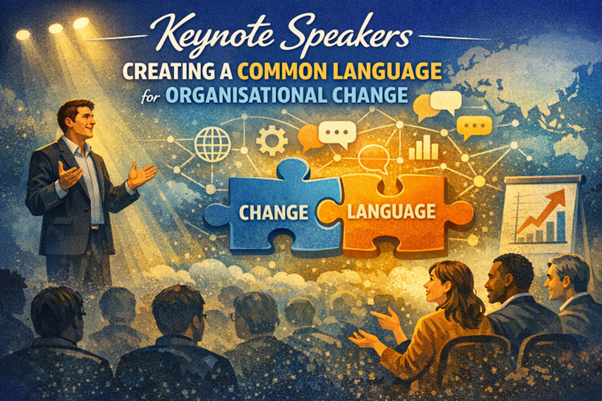
Introduction: The Role of Communication in Change
Successful organisational change hinges on clear, consistent communication. When teams, departments, and leadership speak the same language, transformation becomes not only possible but sustainable. For business leaders, HR professionals, and change managers, the challenge lies in breaking down barriers and ensuring everyone is aligned. At the heart of this alignment is a common language—a shared set of terms, concepts, and narratives that unify diverse perspectives and drive collective action.
The Power of Keynote Speakers
Keynote speakers play a pivotal role in shaping how organisations approach change. With their unique blend of expertise, charisma, and storytelling prowess, these thought leaders have the ability to inspire audiences and set the tone for new directions. Their influence extends beyond the stage, acting as catalysts for dialogue and reflection among employees at every level. More than just delivering information, keynote speakers help to create momentum and buy-in, setting the foundation for a successful transformation journey.
Defining Common Language in Organisations
A common language refers to more than just shared vocabulary; it encompasses the stories, metaphors, and frameworks that enable people to make sense of change together. In the context of organisational transformation, common language is what allows employees to connect their roles to the broader vision. It helps teams avoid misunderstandings and create a unified approach to problem-solving. When everyone is on the same page, decision-making becomes more straightforward and collaboration flourishes.
Why Common Language Matters in Change
Organisational change often fails due to miscommunication and fragmentation. Without a shared language, messages become muddled, intentions are misunderstood, and resistance builds. The absence of clarity can erode trust and breed uncertainty. Conversely, a common language fosters shared understanding, making it easier for people to grasp new concepts, adapt to new processes, and embrace change. It turns abstract strategies into concrete actions, empowering employees to take ownership and contribute meaningfully to transformation efforts.
How Keynote Speakers Foster Common Language
Keynote speakers are adept at bridging gaps through compelling storytelling. By weaving relatable narratives and vivid metaphors into their presentations, they make complex ideas accessible and memorable. This approach resonates with audiences, enabling them to internalise messages and repeat them in their own words. Additionally, keynote speakers use consistent messaging, reinforcing key themes throughout their talks to ensure that important concepts stick. They pose thought-provoking questions, encourage dialogue, and invite participants to share their own experiences, nurturing a culture of open communication.
Through the use of analogies and real-world scenarios, keynote speakers can translate strategic objectives into everyday language. For example, describing change as a journey rather than a destination helps employees understand that transformation is ongoing and requires collective effort. By aligning their language with the organisation’s values and aspirations, speakers encourage teams to adopt new mindsets and behaviours.
Practical Strategies for Leaders to Sustain Common Language
While keynote speeches are powerful, their true impact depends on what happens next. Leaders must take active steps to reinforce and sustain the common language introduced during these events. Here are practical strategies to consider:
- Encourage Dialogue: Create forums, workshops, or regular meetings where employees can discuss the themes raised by keynote speakers. This helps solidify shared understanding.
- Document Key Messages: Capture the language, metaphors, and stories introduced in the keynote and integrate them into internal communications, training materials, and organisational policies.
- Role Modelling: Leaders should consistently use the common language in everyday interactions, emails, and public statements to reinforce its importance.
- Feedback Loops: Invite employees to share how the new language influences their work. Encourage constructive feedback to refine and evolve the shared vocabulary.
- Visual Reminders: Use posters, digital displays, and newsletters to keep key phrases and concepts visible throughout the organisation.
- Recognition and Rewards: Acknowledge individuals or teams who exemplify the common language, fostering positive reinforcement and wider adoption.
Case Studies: Successful Organisational Change Driven by Keynote Speakers
Consider a multinational company facing the challenge of digital transformation. The leadership invited a keynote speaker renowned for demystifying technology. Through engaging stories and practical examples, the speaker introduced a common language around digital agility, using metaphors such as “navigating a digital river” and “building bridges between teams”. Post-event, the organisation observed a marked increase in cross-departmental collaboration and innovation, as employees began using these metaphors to guide their discussions and decisions.
In another scenario, a public sector organisation undergoing a cultural shift hosted a keynote address focused on inclusivity and shared values. The speaker’s consistent use of terms like “shared purpose” and “collective impact” resonated deeply. Leadership reinforced these phrases in subsequent communications, and within months, the organisation recorded higher engagement scores and more effective teamwork, as staff rallied around the new common language.
Measuring the Impact of Common Language
Assessing the effectiveness of a common language in change initiatives requires both qualitative and quantitative measures. Leaders can track employee engagement through surveys, focus groups, and feedback sessions. Monitoring the frequency and context in which key terms and metaphors appear in meetings, documents, and digital platforms provides insight into adoption levels. Additionally, reviewing performance metrics, such as project completion rates and collaboration indices, can help determine whether the shared language is translating into tangible outcomes.
Organisations may also analyse internal communication channels for consistency and clarity, looking for signs that messages are being understood and acted upon. Regular pulse checks ensure that the common language remains relevant and continues to support the change agenda.
Conclusion: Turning Words into Action
Keynote speakers have a unique ability to spark organisational change by creating a common language that unites teams and drives progress. Their influence extends beyond their words, empowering leaders and employees to turn shared understanding into meaningful action. For business leaders, HR professionals, and change managers, embracing and sustaining this common language is essential to overcoming barriers and achieving lasting transformation. By fostering open dialogue, modelling consistency, and measuring impact, organisations can ensure that the language of change becomes the language of success.