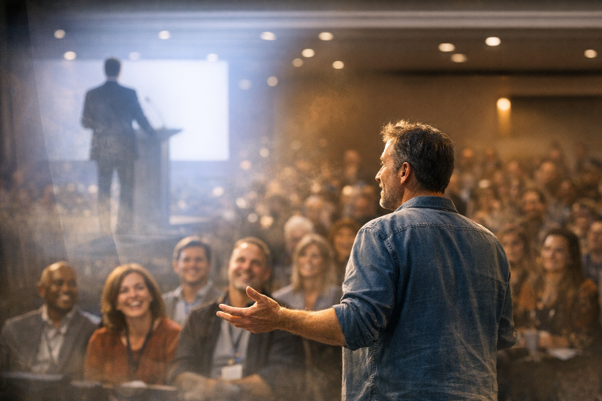
There is a reason some keynote speakers leave a room buzzing long after the applause ends, while others deliver a technically flawless talk that is forgotten before lunch. It is not always the slickest slides, the most dramatic stagecraft, or the most perfectly timed jokes that make the difference. More often, it is authenticity. Audiences respond to keynote speakers who feel real, credible and human. They connect with people who speak from lived experience rather than from a polished script, and that connection is what turns a presentation into a memorable moment. Research and industry commentary consistently point to the same pattern: trust, relatability and emotional resonance matter more than surface-level polish when it comes to making an impact on stage.
An authentic keynote speaker is not unprepared or rambling. Authenticity is not the opposite of professionalism. In fact, the best authentic speakers are often very well prepared. The difference is that their preparation serves the message rather than smothering it. They know their material deeply enough to speak with freedom, adapt to the room and sound like a real person rather than a rehearsed performance. By contrast, a polished presenter can sometimes feel over-curated. Every gesture is planned, every phrase has been ironed flat, and every story lands with such mechanical precision that the audience senses distance instead of warmth. That does not mean polish is bad, but when polish becomes the main event, connection suffers. Insights from [Toastmasters International]() and several speaking-industry sources make this distinction clear: authenticity works best when it is supported by preparation, not replaced by it.
One of the biggest reasons authentic keynote speakers connect better is trust. An audience is always asking, consciously or not, ‘Do I believe you?’ When a speaker shares lessons shaped by real setbacks, difficult decisions or genuine experience, listeners are far more likely to see the message as earned rather than borrowed. According to articles from [Gregory Schaefer]() and [KBC Speaks](), audiences quickly detect the difference between a speech built on lived perspective and one that simply sounds impressive. Trust grows when people sense honesty, emotional congruence and a willingness to admit that success is rarely neat. A speaker who reveals what went wrong, what changed and what was learned builds credibility because the audience can recognise their own messy reality in that account.
Authentic speakers are also more relatable. Perfect delivery can be admirable, but admiration is not the same as connection. If a presenter appears too polished, the audience may see them as impressive but inaccessible. That creates a subtle barrier. By comparison, a keynote speaker who sounds natural, acknowledges uncertainty and communicates with genuine warmth feels easier to relate to. [Courage Coaches]() argues that perfection can unintentionally communicate distance, whereas authenticity signals, ‘I am human, just like you.’ That matters in conference halls, leadership summits and company events because people do not just want information. They want a speaker who understands what pressure, change, doubt or ambition actually feel like. Human connection is built when the audience sees themselves in the story, not when they are simply dazzled by performance.
Another reason authenticity wins is that it makes stories more powerful, and stories are what people remember. Facts, frameworks and bullet points can be useful, but without emotional texture they often fade quickly. Narrative gives ideas shape. When a keynote speaker tells a story rooted in real experience, the audience does not just understand the lesson intellectually; they feel it. Sources such as [BNC Speakers]() and [KBC Speaks]() highlight that storytelling improves attention, retention and the likelihood that people will act on what they have heard. This is especially important for keynote speeches, which are often meant to set the tone, reinforce a strategic message or inspire behavioural change. A polished presenter may deliver information cleanly, but an authentic speaker makes it stick because the content is tied to genuine experience and emotional truth.
Audience engagement also improves when a speaker is authentic because authenticity creates responsiveness. A real keynote does not feel like a recorded track being played back on stage. It feels alive. The speaker notices the room, adjusts pace, allows moments to breathe and responds to the audience’s energy. That flexibility is difficult when someone is tightly bound to a script or committed to delivering every line exactly as rehearsed. [Toastmasters International]() notes that authentic speaking is guided by openness, connection, passion and listening. That final point matters more than many presenters realise. Great keynote speaking is not just talking at an audience; it is listening to them in real time through body language, attention and atmosphere. An authentic speaker can pivot and lean into what the room needs, which is one reason they often feel more compelling than someone who is merely polished.
Vulnerability plays a role here too, although it must be handled with care. Audiences do not want oversharing for its own sake, nor do they want emotion used as manipulation. What they respond to is purposeful vulnerability: the kind that sheds light on a lesson, reveals growth and offers a truthful account of challenge or change. Several recent sources on keynote speaking argue that vulnerability builds empathy and trust when it is grounded in service to the audience rather than self-display. [Healthcare Business Today]() notes that modern audiences, especially younger ones, are highly attuned to insincerity and value transparency more than gloss. A keynote speaker who can speak candidly about setbacks without making the talk self-indulgent often creates the strongest connection, because the audience feels safe enough to reflect on their own struggles and possibilities.
For event organisers and businesses, this is not just a matter of style; it has practical value. An authentic keynote speaker can improve the return on investment of an event because attendees are more likely to remember, discuss and act on a message that feels real. [BNC Speakers]() and [Jason Redman]() both argue that keynote impact depends on alignment, relevance and genuine connection rather than fame or flawless delivery alone. If a speaker captures the mood of the moment, understands the audience’s challenges and speaks with sincerity, the session can reinforce organisational goals, support cultural change and create a shared reference point long after the event is over. A polished presenter may receive polite applause, but an authentic keynote speaker is more likely to generate the conversations that continue in corridors, team meetings and follow-up actions.
Over-polish can even backfire. When a presentation feels too rehearsed, audiences may suspect that the speaker is selling an image rather than sharing insight. In an age of highly curated online personal brands, people are increasingly sensitive to anything that feels manufactured. That is one reason the wider speaking industry has been moving towards authenticity, lived experience and honest storytelling. [KBC Speaks]() describes a clear shift away from formulaic speeches and towards speakers who bring heart, honesty and personal truth. The point is not that every talk should be informal or emotionally raw. Rather, the audience wants congruence. They want the speaker’s words, tone, body language and values to line up. When they do, the message lands with far greater force than any amount of presentation sheen can create on its own.
Of course, the strongest keynote speakers do not choose between authenticity and polish; they combine the right amount of both. A keynote should still be well structured, purposeful and professionally delivered. Good preparation matters. Clear timing matters. Strong storytelling technique matters. But these elements should support authenticity, not replace it. The ideal keynote speaker is not sloppy, but neither are they hiding behind a performance. They are prepared enough to be fully present. They know their message so thoroughly that they can inhabit it rather than recite it. This is where many outstanding speakers excel: they blend craft with candour. The result is a presentation that is compelling without being artificial and polished without feeling distant. That balance is often what separates a keynote that merely sounds good from one that genuinely changes how people think and feel.
For those choosing speakers, the lesson is straightforward. Do not only ask whether someone is charismatic, experienced or well known. Ask whether their message feels earned. Look for original thinking, relevant lived experience, a conversational delivery style and the ability to tailor content to the audience rather than forcing every room through the same keynote. Consider whether their stories illuminate real lessons instead of simply promoting a personal brand. Watch how they handle unscripted questions or unexpected moments. Those are often the clearest signs of authenticity. As guidance aimed at planners suggests, the most effective keynote speakers are the ones who bring substance, self-awareness and audience empathy to the platform, not just stage confidence.
Ultimately, authentic keynote speakers connect better than polished presenters because people are wired to respond to truth, not theatre. A flawless performance may impress, but authentic communication builds trust, sparks emotion and stays with an audience long after the event ends. When a speaker brings lived experience, honest reflection and genuine presence to the stage, listeners do not just hear a message; they recognise it. That recognition is the foundation of connection, and connection is what makes a keynote matter. In a crowded speaking landscape, polish may win attention for a moment, but authenticity is what wins hearts, minds and lasting impact.